Introduction: A Safer Home Starts with the Right Community
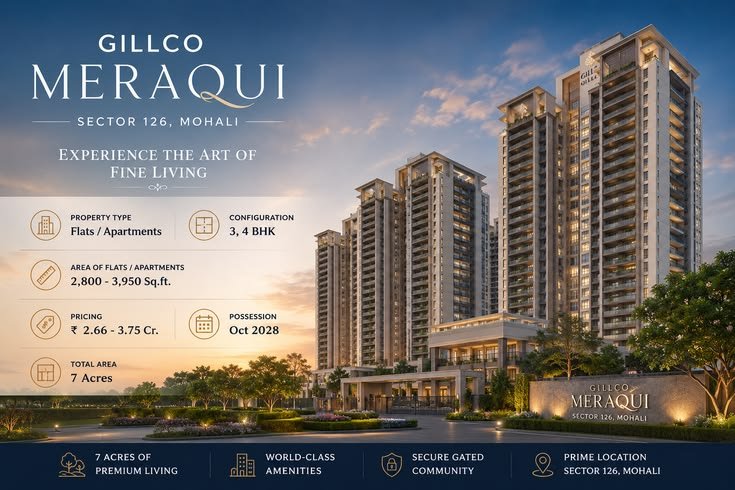
Gillco Meraqui, Gillco Luxury Apartments Mohali and Gillco Meraqui 126 Mohali are relevant search terms for homebuyers exploring modern residential living in Mohali. When choosing a home, families need more than attractive interiors and spacious rooms. They also want a secure environment where children can play, older family members can move around comfortably and everyone can enjoy greater peace of mind. A well planned gated community can support these needs through controlled entry, suitable lighting, responsible management and shared spaces designed around residents’ daily lives.
For people exploring Gillco Meraqui Mohali, Luxury Living Mohali and Premium Housing Mohali, safety deserves the same attention as location, design and price. A residential property should offer a comfortable balance between privacy and community life. Before making a decision, buyers should understand how security systems work, how visitors enter the premises, how emergencies are handled and how common areas are maintained. These details can help families evaluate Luxury Apartments in Mohali, including 3 & 4 BHK Apartments Mohali and make an informed choice based on their long term needs rather than appearances alone.
Understanding the Meaning of a Safe Gated Community
A gated community is a residential development where access to the premises is managed through designated entrances and boundaries. Depending on its design and management, it may include security personnel, visitor registration, surveillance cameras, access control systems and shared facilities for residents.
However, having a gate does not automatically make a residential complex safe. Effective security depends on how the entire system works. Entry procedures must be followed consistently, equipment must remain functional and the management team must respond properly when a concern arises.
A secure community also considers the everyday experiences of its residents. A parent returning home late, a child walking to a play area, or an older person using a common pathway should be able to move around with reasonable confidence. Security measures should support these activities without making residents feel unnecessarily restricted.
For families considering a new home, it is helpful to look beyond the entrance gate and understand the community’s complete approach to safety. This includes physical security, emergency readiness, maintenance, privacy and cooperation among residents.
Why Family Safety Matters When Buying a Home
Buying a home is a major decision because it affects everyday routines, financial planning and family comfort. The surrounding residential environment can influence how freely children play, how easily older residents access common facilities and how comfortable everyone feels when entering or leaving the property.
For parents, safety often begins with the ability to understand who can enter the premises. Clear visitor procedures can reduce unwanted access and help security personnel identify unfamiliar people. Well maintained common areas also make it easier for families to use shared facilities without unnecessary concerns.
Older family members may have different requirements. They may benefit from well lit pathways, accessible entrances, secure lifts where applicable and clear routes to parking areas or community facilities. These details can make everyday movement more comfortable.
Working professionals may value reliable entry arrangements, particularly when they arrive home late or need to receive deliveries while managing a busy schedule. A well organised security process can make these routines easier.
A safe residential environment should therefore support different age groups and lifestyles. It should not focus only on preventing unauthorised entry but also on helping residents use their homes and shared spaces comfortably.
Controlled Entry: The First Layer of Residential Security
Controlled entry is one of the most visible features of a gated community. It helps establish a clear boundary between public access and residential areas. Depending on the development, the entrance may include a staffed security desk, an access control system, or a combination of both.
Security personnel should follow a consistent procedure when unfamiliar visitors arrive. They may confirm the visitor’s identity, contact the resident, record relevant entry information and provide access only after the required approval. The exact process depends on the community’s policies.
A proper visitor management system is especially useful when residents frequently receive guests, domestic workers, maintenance professionals, or delivery personnel. Clear rules help prevent confusion and ensure that security decisions do not depend entirely on guesswork.
Homebuyers should also ask how the entrance operates during busy periods. A system that works well when only a few vehicles arrive may become less effective during peak hours if there is no clear arrangement for managing traffic.
Another important consideration is the movement of emergency vehicles. Security procedures should allow authorised emergency responders to enter promptly when necessary. Safety measures should protect residents without creating avoidable delays during urgent situations.
When evaluating Gillco Meraqui Location, buyers can include entrance management and access arrangements among the questions they ask during a property visit. They should verify the actual security facilities and operating procedures rather than assuming that every gated residential development offers identical protection.
Security Personnel and Their Everyday Responsibilities
Security guards play an important role in maintaining order within residential communities. Their responsibilities may include monitoring entrances, observing common areas, managing visitor access, reporting unusual activity and helping residents contact the appropriate person during an incident.
The effectiveness of a security team depends on more than the number of guards present. Training, alertness, communication, shift arrangements and clear responsibilities all influence how well the system works.
For example, guards should understand what to do when an unknown person attempts to enter without resident approval. They should also know how to respond when a resident reports a suspicious situation, a vehicle blocks an emergency route, or an unfamiliar person is found in a restricted area.
Communication between security staff and property management is equally important. If guards cannot report maintenance problems or receive instructions quickly, small issues may remain unresolved. A clear reporting process helps the management team identify and address concerns.
Homebuyers can ask whether security staff receive training in emergency response, first aid, fire safety procedures and conflict management. They can also observe whether the entrance is attended during their visit and whether visitor checks appear organised.
A responsible security arrangement combines human judgement with clear procedures. Technology can assist the team, but it cannot replace the need for trained people who understand the community’s rules and residents’ concerns.
CCTV Surveillance and Responsible Monitoring
Closed circuit television, commonly known as CCTV, can support security by allowing authorised personnel to observe selected common areas. Depending on the layout and system design, cameras may be installed near entrances, vehicle access points, parking areas, or other shared spaces.
Surveillance can help security staff review certain incidents and identify activity that requires attention. Visible cameras may also discourage some forms of unwanted behaviour. However, CCTV should be treated as one part of a broader security plan rather than a complete solution.
The quality of the system matters. Cameras need suitable positioning, adequate lighting, regular maintenance and a clear process for reviewing footage when an authorised need arises. A camera that is damaged, poorly positioned, or not functioning cannot provide the intended benefit.
Privacy is equally important. Residents should understand which common areas are monitored, who can access recordings, how footage is stored and how long it is retained under the applicable policy and law. Cameras should not be used in private spaces where residents reasonably expect privacy.
Homebuyers can ask whether the community uses CCTV, which areas are covered and who is responsible for maintaining the equipment. They should also find out whether monitoring is performed continuously or footage is reviewed only when required.
For a family, the purpose of surveillance should be to improve awareness and support appropriate incident handling. Responsible monitoring protects the community’s interests while respecting the privacy and dignity of residents.
Well Lit Pathways, Parking Areas and Common Spaces
Lighting is a simple but important part of residential safety. Proper illumination helps residents see pathways, identify obstacles, use entrances comfortably and move between buildings and parking areas after dark.
Poor lighting can make it harder to recognise people and objects. It can also increase the risk of trips and falls, particularly for children, older adults and anyone carrying shopping bags or other items.
A well planned lighting arrangement should consider the main entrance, pedestrian routes, staircases, parking spaces, building entrances and shared facilities. Lighting should be sufficiently consistent to reduce dark corners and improve visibility without creating excessive glare.
Maintenance is just as important as the original design. Burnt out lights should be reported and repaired promptly. Outdoor fixtures should be suitable for their location and weather exposure, while pathways should remain free from avoidable obstructions.
Parking areas deserve particular attention because vehicles, pedestrians and children may share the same space. Clear markings, suitable lighting, visible pedestrian routes and sensible traffic management can help reduce confusion.
During a property visit, buyers should try to inspect the surroundings at different times of day if possible. A daytime visit may not reveal problems that become noticeable after sunset.
For families researching Premium Flats in Mohali, lighting and pedestrian safety are practical considerations that deserve attention alongside apartment interiors and shared amenities.
Safe Play Areas for Children
Children need opportunities to play, exercise and spend time outdoors. A residential community with suitable shared play spaces can make these activities easier for families, especially when the facilities are accessible without requiring children to travel far from home.
However, the presence of a play area does not automatically make it safe. Its design, maintenance, location and relationship with vehicle movement all matter.
Parents should look for play spaces that are separated from busy vehicle routes where possible. Equipment should be appropriate for the intended age group and surfaces should be maintained to reduce the risk of injury. Broken fixtures, exposed edges, damaged flooring, or standing water should be reported and addressed.
Clear visibility is another useful consideration. Parents and caregivers should be able to supervise children without unnecessary obstacles blocking their view. Seating near play spaces can also make supervision more comfortable.
Community rules can support safer play. Residents may agree on suitable play hours, responsible equipment use and procedures for reporting damage. These arrangements help maintain shared spaces for everyone.
Families should also consider how children move between their apartment and the play area. Safe pedestrian routes, clear signage and sensible vehicle management can reduce potential conflicts between children and moving vehicles.
When reviewing Gillco Meraqui Amenities, prospective buyers should confirm which facilities are actually available, how they are maintained and what safety arrangements apply. They should not rely on assumptions based only on marketing images or general descriptions of modern residential living.
Fire Safety and Emergency Preparedness
Fire safety is essential in any residential building. Even a well managed community cannot eliminate every possible risk, so residents need suitable precautions and a clear emergency response plan.
Depending on the building design and applicable regulations, fire safety provisions may include alarms, firefighting equipment, designated escape routes, emergency lighting, fire doors and other protective systems. The precise requirements vary according to the property and the relevant rules.
Equipment alone is not enough. Fire exits must remain accessible, escape routes should not be blocked by stored items and residents should know how to report an emergency. Management must also ensure that required equipment is inspected and maintained according to applicable standards.
Families can ask about fire safety arrangements during a site visit. They may wish to understand the evacuation procedure, the location of emergency exits, the availability of firefighting equipment and how residents are informed about safety instructions.
Emergency planning should account for people who may need additional assistance, including young children, older adults and residents with limited mobility. Clear communication can make a significant difference during a stressful situation.
Residents should avoid using lifts during a fire unless emergency personnel or the applicable evacuation procedure specifically directs otherwise. They should follow official instructions and move to designated safe areas.
A responsible residential community treats fire safety as an ongoing responsibility. Regular checks, clear communication and appropriate maintenance help ensure that protective measures remain useful over time.
Building Maintenance and Structural Safety
A home’s safety also depends on the condition of the building and its shared infrastructure. Security at the entrance cannot compensate for poorly maintained electrical systems, damaged staircases, unsafe railings, or neglected common areas.
Regular maintenance helps identify potential problems before they become more serious. Depending on the property, important areas may include lifts, electrical installations, water systems, drainage, external pathways, staircases and shared equipment.
Residents should have a clear way to report problems and receive updates about corrective work. A management team that responds promptly to genuine safety concerns can help maintain confidence in the residential environment.
Homebuyers should examine visible signs of maintenance during their visit. They can look at the condition of common corridors, the cleanliness of staircases, the accessibility of emergency routes and the general upkeep of shared facilities.
For a newly constructed property, buyers should also review the relevant approvals, completion documents and other records applicable to the transaction. The exact documents required depend on the development’s status and local regulations.
No building should be considered risk free simply because it looks modern. Ongoing inspection and maintenance are important throughout the life of a residential property.
When comparing Residential Projects in Mohali, families should evaluate the management approach as carefully as the appearance of the building. A clean entrance and attractive lobby are positive impressions, but consistent maintenance is a more meaningful long term consideration.
Privacy and Protection of Personal Information
Residential safety includes protecting personal information as well as physical spaces. Visitor logs, access cards, vehicle details, contact numbers and surveillance recordings may contain information that should be handled responsibly.
A well managed community should have clear procedures explaining who can collect this information, why it is required, who can access it and how it is protected. Information should not be shared casually or used for unrelated purposes.
Residents should also be cautious when sharing entry codes, access credentials, or photographs of security arrangements. Unnecessary disclosure may make access systems easier to misuse.
Digital access systems can be convenient, but they require sensible management. Lost access cards should be reported, access rights should be updated when necessary and shared credentials should be avoided where individual access is available.
The same care applies to resident communication groups. These groups can be useful for maintenance notices and emergency updates, but personal details should not be circulated without a valid reason.
Homebuyers can ask how the management team handles resident information and complaints about privacy. They can also check whether the community has written policies covering access systems and surveillance.
A secure home should provide both physical protection and reasonable control over personal information. Respect for privacy helps create a community where residents feel comfortable rather than constantly monitored.
Parking Management and Vehicle Security
Parking is an important part of everyday residential life. A clear parking arrangement can reduce disputes, improve movement through the premises and help protect pedestrians.
Depending on the development, parking may be provided in designated surface areas, basements, or other planned spaces. Buyers should confirm which parking facilities are included in their purchase and understand the applicable allocation rules.
Vehicle security may involve controlled entry, suitable lighting, surveillance in common areas and rules governing visitor parking. These measures can help improve oversight, although no system can guarantee that a vehicle will never be damaged or targeted.
Traffic management is particularly important where children and older residents use the same internal routes as cars and two wheelers. Clearly marked pedestrian areas and sensible driving rules can reduce the chance of accidents.
Residents should avoid blocking fire access routes, ramps, exits, or designated emergency areas. Management should communicate parking rules clearly and handle repeated violations consistently.
During a property visit, buyers can assess whether vehicles are parked in an organised manner and whether pedestrian movement appears convenient. They can also ask how the community handles unauthorised parking and reports of vehicle damage.
Good parking management improves more than convenience. It supports visibility, emergency access and the everyday safety of everyone using the premises.
Visitor Management, Deliveries and Domestic Help
Modern households regularly receive visitors, food deliveries, courier services, repair professionals and domestic workers. A residential security system must accommodate these everyday needs without creating unnecessary inconvenience.
A clear visitor process can help security personnel confirm the purpose of a visit and obtain resident approval when required. The process should be practical enough to use consistently, even during busy periods.
Delivery management is another important consideration. Communities may have designated delivery areas, instructions for contacting residents, or procedures for allowing authorised delivery personnel inside. Buyers should ask how the actual system works rather than assume every property follows the same policy.
Domestic workers and regular service providers may require a different arrangement from occasional visitors. A documented process can help residents authorise access while allowing security personnel to follow consistent rules.
Security procedures should also respect people. Staff should communicate politely, avoid discriminatory treatment and apply the same reasonable standards to visitors regardless of their background.
Residents have a role to play as well. They should avoid authorising entry without proper consideration and should report lost access credentials or suspicious requests through the designated channel.
An effective system balances convenience and caution. It should make normal household activities manageable while reducing opportunities for unauthorised access.
Choosing a Family Friendly Apartment Layout
A secure community is important, but the apartment itself also needs to suit the family’s everyday routines. Layout, accessibility, natural light, ventilation and the placement of rooms can influence how comfortable and practical a home feels.
Families considering 3 & 4 BHK Apartments Mohali may have different requirements depending on household size, work arrangements, children’s ages and plans for the future. A larger apartment may offer additional flexibility, but the best choice depends on the family’s budget and actual needs.
Parents may prefer a layout that allows them to supervise younger children more easily. Older residents may benefit from fewer unnecessary level changes and convenient access to lifts where available. Families working from home may want a separate area for concentration and privacy.
The location of the apartment within a building can also affect everyday convenience. Buyers may consider the distance to lifts, staircases, parking areas and shared facilities. They should check how emergency routes can be accessed from the apartment.
Door locks, windows, balcony railings, electrical fittings and other visible features deserve careful inspection. Buyers should ask questions about any concerns and seek qualified professional advice where necessary.
The Gillco Meraqui Floor Plan is a relevant point of reference for people researching apartment layouts, but buyers should review the actual floor plan and specifications for the unit they intend to purchase. They should not assume that all layouts provide identical accessibility or safety features.
A good apartment should meet the family’s needs today while allowing reasonable flexibility as those needs change.
How Location Can Influence Residential Safety
Location affects how residents travel, access essential services and manage everyday responsibilities. A convenient location may reduce commuting time and make it easier to reach workplaces, schools, healthcare facilities and other useful destinations.
Families exploring Sector 126 Mohali Property may want to understand the surrounding roads, transport options, nearby services and access routes before making a purchase. They should also assess traffic patterns and the general condition of the approach roads.
A convenient address alone does not guarantee a safe environment. Buyers should observe the immediate surroundings, street lighting, pedestrian conditions, traffic movement and accessibility of emergency services.
They may also wish to visit at different times of day. Traffic and noise can change between morning, afternoon and evening, while the condition of nearby streets may be easier to assess after dark.
When reviewing Apartments Near Chandigarh, buyers should consider how the location fits their actual travel needs. The distance to a destination, available transport and daily travel time may matter more than a broad location label.
The Gillco Meraqui Location should be assessed using verified project information and an actual site visit. Buyers can compare the location with their family’s daily routine rather than relying solely on general claims about convenience.
A suitable location combines practical access with an environment that supports comfortable everyday living.
Community Rules and Responsible Neighbourhood Living
Security does not depend only on professional staff or installed equipment. Residents also influence the quality of the shared environment through their everyday behaviour.
Community rules can establish expectations for visitor access, parking, noise, use of shared facilities, waste disposal and reporting safety concerns. When rules are clear and reasonable, residents have a better understanding of their responsibilities.
For example, keeping staircases and emergency exits clear helps preserve access during an urgent situation. Following parking rules can improve visibility and reduce conflicts between vehicles and pedestrians. Reporting broken lights or damaged equipment can help management respond before a minor problem becomes more serious.
Respectful communication is equally important. Neighbours may have different routines, family structures and preferences, so disagreements should be handled through appropriate channels rather than personal confrontation.
Residents should also understand the limits of their responsibilities. Suspicious activity or a serious safety concern should be reported to the appropriate security staff or authorities instead of being handled through risky personal intervention.
Community meetings and organised feedback systems can help residents raise recurring concerns. A constructive approach allows management to identify common problems and improve procedures where possible.
A good residential community is not one without disagreements or incidents. It is one where residents and management have practical ways to address concerns fairly and responsibly.
The Role of Property Management in Maintaining Security
Property management connects the various elements of a residential safety system. It coordinates maintenance, communicates rules, manages shared facilities and helps ensure that security arrangements remain operational.
A strong management process should include a clear method for reporting problems. Residents should know whom to contact when an access control system stops working, a common light fails, or a safety concern requires attention.
Response time matters. Some problems may be routine, while others require immediate action. A useful reporting system distinguishes urgent safety issues from ordinary maintenance requests.
Management should also maintain relevant records, arrange necessary inspections, communicate changes to procedures and follow applicable legal requirements. Residents should be able to understand the rules that affect their daily lives.
Before purchasing a property, buyers can ask who will manage the development, what arrangements apply to common area maintenance and how residents can raise complaints. For a project that is still under development, they should confirm which arrangements are planned and which are already operational.
It is also useful to understand the expected maintenance charges and what services they cover. A realistic understanding of ongoing costs helps families plan their budgets and evaluate the long term management arrangements.
For buyers researching Gillco Residential Projects and Gillco Group Projects, the developer’s role and the future management structure are separate but related considerations. Buyers should verify the specific project’s documentation and understand who will be responsible for operating and maintaining shared facilities after possession.
Safety Features and the Overall Cost of Ownership
Homebuyers naturally compare property prices, apartment sizes, locations and amenities. However, the initial purchase price is only one part of the total cost of owning a home.
Maintenance charges, utility costs, parking arrangements, repairs and other applicable expenses can affect the household budget over time. Buyers should understand these costs before committing to a purchase.
Security related services may be included within the regular maintenance arrangement, charged separately, or managed under another structure. The actual arrangement depends on the development and its governing documents.
When researching Gillco Meraqui Price, buyers should request current, project specific pricing information and a clear explanation of applicable charges. They should also confirm which features and services are included in the quoted price and which may involve additional costs.
The Gillco Meraqui Amenities should be reviewed in the same way. Buyers need to understand what facilities are included, whether they are operational or planned and what ongoing costs may apply to their use and maintenance.
It is sensible to compare properties on a like for like basis. A lower purchase price may not necessarily mean lower long term costs, while a higher price does not automatically guarantee better security.
The right decision comes from understanding the full financial commitment and assessing whether the property meets the family’s priorities.
What Homebuyers Should Verify Before Booking
Before booking a home, families should review the property’s legal and practical details carefully. They should verify the developer’s identity, applicable project registrations, relevant approvals, possession timelines and the documents required for the transaction.
Where applicable, buyers can check project information through the relevant state real estate regulatory authority and seek independent legal advice before signing an agreement. They should read the agreement carefully and clarify the obligations of the buyer and developer.
Security claims should also be checked. If marketing material mentions controlled entry, CCTV, emergency systems, or other facilities, buyers should ask whether those features are operational, planned, or subject to future implementation.
A site visit provides an opportunity to inspect the entrance, common areas, lighting, parking and visible maintenance standards. Buyers can ask how complaints are handled and what happens when a security system or shared facility requires repair.
For a development under construction, the visit may not reveal the final operating arrangements. In that situation, buyers should seek written information about promised facilities and the relevant terms in the agreement.
The Gillco Meraqui project details, including price, layout, location and amenities, should be confirmed through current official information before a purchase decision. This helps prevent misunderstandings caused by outdated listings or incomplete promotional descriptions.
Careful verification is not a sign of distrust. It is a sensible step when making a long term financial and family decision.
Is a Gated Community the Right Choice for Every Family?
Gated communities can provide useful advantages, but they are not automatically the best option for every household. Families should consider their lifestyle, budget, privacy preferences and expectations from shared facilities.
Some households appreciate controlled access, managed common areas and opportunities for children to meet neighbours. Others may place greater importance on lower maintenance costs, a smaller residential setting, or more independent control over their property.
The quality of management also makes a difference. A gated community with poorly maintained equipment or inconsistent visitor procedures may not provide the experience buyers expect. Conversely, a smaller development with clear rules and responsible maintenance may meet a family’s needs effectively.
Residents should also understand that security measures cannot remove every risk. Personal awareness, appropriate precautions, functioning infrastructure and responsible management remain important.
The best approach is to compare the actual features of each property instead of choosing based only on the presence of a gate or the word “luxury” in its description.
For families exploring New Launch Projects Mohali, this comparison is particularly important because some facilities and operating procedures may still be planned. Buyers should distinguish between what is promised, what is documented and what is already available.
A thoughtful decision focuses on suitability, verified information and long term comfort.
Why Gillco Meraqui May Be Worth Exploring for Modern Family Living
Families researching Gillco Meraqui Mohali may be looking for a residential property that fits their expectations for space, convenience and contemporary living. Before deciding whether the project is right for them, they should assess the apartment options, location, available amenities, documentation and security arrangements using reliable project specific information.
For households interested in Luxury Apartments in Mohali, a comfortable home involves more than interior finishes. The surrounding environment, access to essential services, maintenance standards and the management of shared spaces all contribute to the overall living experience.
Buyers comparing Premium Flats in Mohali should also consider how well an apartment suits their family’s daily routine. A convenient layout, suitable parking arrangement, accessible common areas and clear community rules may matter just as much as visual design.
The developer’s background is another useful part of the evaluation. People researching Gillco Group Mohali and Gillco Group Sector 126 should review the information relevant to the specific project, including available approvals, project status and documented commitments. General information about a developer should not replace checking the actual property being considered.
A practical evaluation should include questions about security personnel, visitor access, surveillance, fire safety, emergency procedures and maintenance responsibilities. Buyers should request confirmation of specific features rather than treating general descriptions of a residential development as proof that every measure is available.
For anyone exploring Mohali Real Estate, the most useful purchase decision is one based on verified details and personal requirements. A property may be worth considering when its location, layout, cost, facilities and management arrangements align with the family’s priorities.
How to Evaluate a Residential Community During a Visit
A site visit gives homebuyers a chance to understand how a property looks and operates beyond its promotional material. It is useful to take enough time to inspect both the apartment and the shared spaces.
Start by observing the main entrance. Consider whether the access arrangement appears organised, whether visitors receive clear instructions and whether the entrance can accommodate normal traffic without unnecessary confusion.
Next, look at the internal pathways and common areas. Notice the lighting, cleanliness, visibility, condition of surfaces and ease of movement between buildings and facilities. If parking is available, observe whether vehicles and pedestrians have clearly defined routes.
Ask questions about security and emergency arrangements. Buyers can request details about CCTV coverage, visitor registration, fire safety equipment, maintenance reporting and the process for contacting management during an urgent situation.
If possible, arrange a visit at a different time of day. A second visit can reveal differences in traffic, lighting, noise and activity that may not be obvious during the first inspection.
It is also helpful to review written project information after the visit. Verbal explanations should be checked against the relevant documents and agreement terms, especially when they concern costs, promised facilities, or possession timelines.
A careful inspection helps buyers move beyond first impressions. It gives them a more realistic understanding of the property and helps them ask better questions before making a commitment.
The Future of Residential Security in Mohali
Residential security continues to evolve as communities adopt digital access systems, improved communication tools and more organised maintenance processes. These developments can make it easier to manage visitors, report problems and share important information with residents.
However, newer technology is useful only when it is appropriate for the property and properly maintained. A digital system that residents cannot use easily or that management fails to update may create additional problems instead of solving them.
Future ready communities should balance convenience, privacy, reliability and accessibility. Residents need practical systems that work for different age groups and levels of technical confidence.
Physical design will remain important. Well lit pathways, clear building layouts, accessible emergency routes, maintained equipment and sensible traffic management are fundamental parts of a safe residential environment.
Community communication will also continue to matter. Residents should know how to report concerns, receive emergency information and access updates about maintenance or changes to security procedures.
As Mohali Real Estate develops, homebuyers can benefit from evaluating both current facilities and the management arrangements that will support them over time. A modern residential property should be assessed not only by the technology it uses but also by how effectively its people and systems work together.
Choose a Home That Supports Your Family’s Peace of Mind
A safe gated community combines practical design, controlled entry, responsible security staff, appropriate surveillance, good lighting, reliable maintenance and clear emergency procedures. Each element plays a role in supporting everyday comfort, but no single feature can guarantee complete protection.
For families exploring Gillco Meraqui 126 Mohali, the best approach is to evaluate the project through verified information, a careful site visit and a clear understanding of the facilities that are actually available. Buyers should examine the apartment layout, location, ongoing costs, management structure and relevant legal documents before making a final decision.
Whether you are comparing Gillco Luxury Apartments Mohali, other Residential Projects in Mohali, or different options for Premium Housing Mohali, your priorities should remain clear. Choose a home that fits your budget, supports your family’s routine and offers a residential environment whose security and maintenance arrangements you can understand and verify.
A good home is not simply a place to live. It is a place where daily routines feel manageable, shared spaces are cared for and residents know how to raise concerns when something needs attention. By asking the right questions and checking the details carefully, families can make a more confident decision about where they want to build their future.
Frequently Asked Questions
What should families look for in a gated community before buying a home?
Families should review the entry management process, security personnel, lighting, surveillance arrangements, emergency exits, fire safety provisions, parking management and common area maintenance. They should also ask how residents report problems and how quickly management responds. The actual facilities should be verified through a site visit and reliable project documentation.
Does a gated community guarantee complete safety?
No. A gated community may provide additional layers of access control and shared security, but no residential arrangement can guarantee complete safety. The effectiveness of its measures depends on maintenance, staff training, resident cooperation, emergency readiness and consistent implementation of community rules.
How can parents assess whether a residential complex is suitable for children?
Parents can examine the location and condition of play areas, the separation between pedestrian routes and vehicle movement, the quality of lighting and the visibility of shared spaces. They should also ask about equipment maintenance and the rules governing children’s facilities.
Why is visitor registration important in a residential development?
Visitor registration can help security personnel identify guests, confirm resident approval and maintain an appropriate record of access. The system should be consistently applied while respecting privacy and handling personal information responsibly.
What questions should buyers ask about CCTV cameras?
Buyers can ask which common areas are monitored, whether the cameras are operational, who can access recorded footage, how recordings are stored and how maintenance is handled. They should also understand the privacy policy governing surveillance.
How can residents know whether fire safety arrangements are adequate?
Residents should request information about the applicable fire safety provisions, emergency exits, alarms, firefighting equipment, evacuation procedures and inspection arrangements. Buyers should verify relevant requirements with appropriate professionals or authorities rather than relying only on general assurances.
Are security facilities included in apartment maintenance charges?
The answer depends on the individual development’s management arrangements. Buyers should request a written explanation of maintenance charges and confirm whether security personnel, surveillance equipment, common area lighting and other services are included or charged separately.
What should buyers verify about Gillco Meraqui before booking?
Buyers should confirm the project’s current status, applicable registrations and approvals, apartment specifications, floor plans, price, maintenance costs, possession terms and documented facilities. They should also ask which security features are operational and which, if any, are planned for the future.
Read More Projects : Gulshan Empire offers modern homes in Wave City, Ghaziabad, designed for comfortable family living. Developed by Gulshan Group, the project combines spacious layouts, open surroundings and excellent connectivity near NH 24, creating a convenient and comfortable lifestyle for modern families looking for better living spaces.