





The driving education industry in the United Kingdom is entering an important period of development. Changing technology, environmental concerns, learner expectations, and improvements in road safety are influencing how people learn to drive. Between 2026 and 2027, driving schools are expected to place greater emphasis on flexible learning, automatic vehicles, digital resources, and practical skills that prepare learners for modern roads.
For learners in Lancashire, these developments are particularly relevant. Whether someone is starting their first lessons, returning to driving after a break, or considering automatic tuition, understanding industry changes can help them make informed decisions. The growing interest in driving lessons Darwen also reflects the importance of accessible, professional driving education in local communities.
1. The Growing Demand for Automatic Driving Lessons
One of the most noticeable developments in the UK driving industry is the increasing interest in automatic vehicles. Modern vehicles increasingly feature automatic transmissions, hybrid technology, and electric powertrains. These developments are influencing the preferences of new drivers.
Automatic vehicles remove the need to operate a clutch and change gears manually. This can make the initial learning process more manageable for people who find coordinating several vehicle controls challenging.
The demand for automatic driving lessons Darwen may continue to grow as more learners consider the convenience of automatic vehicles for everyday journeys.
Why Are Learners Choosing Automatic Cars?
Several factors contribute to the popularity of automatic driving tuition:
- Simpler vehicle operation: Learners can concentrate more on steering, observation, and traffic awareness.
- Urban driving convenience: Automatic vehicles can be easier to manage in stop-start traffic.
- Electric vehicle development: Many fully electric cars use single-speed transmissions and operate without traditional gear changes.
- Reduced coordination demands: Beginners do not need to manage clutch control and manual gear selection.
However, learners should understand the licence implications before choosing. Passing a practical test in an automatic car generally results in an automatic-only driving licence. Anyone wishing to drive manual vehicles will need to pass a manual practical test.
For residents researching automatic driving lessons Lower Darwen, understanding these differences can help them choose a learning route that matches their future driving requirements.
2. Technology Will Transform Driving Education in 2026–2027
Technology is becoming an increasingly important part of professional driver training. Although practical road experience remains essential, digital tools can help instructors explain complex situations and monitor learner progress.
Driving schools are increasingly able to use digital resources to support lesson planning, communication, and test preparation.
Digital Learning and Theory Test Preparation
Online learning platforms and mobile applications allow learners to study road signs, traffic regulations, and hazard perception outside their practical lessons.
Some useful digital learning methods include:
- Online mock theory tests.
- Hazard perception practice videos.
- Digital lesson schedules and progress records.
- Educational videos explaining manoeuvres.
- Online access to official driving guidance.
These resources can help learners identify areas where additional practice is required.
Advanced Vehicle Technology
Modern cars increasingly include features such as parking sensors, reversing cameras, lane assistance, and automatic emergency braking.
While these technologies can improve convenience and support road safety, learners must understand their limitations. Drivers should never rely entirely on vehicle assistance systems. Developing independent observation, judgement, and vehicle control remains essential.
For driving lessons darwen, the challenge will be helping learners understand modern technology without allowing it to replace fundamental driving skills.
3. More Flexible and Accessible Driving Lessons
Convenience is becoming an important consideration when people select a driving school. Work commitments, education schedules, family responsibilities, and other activities can make it difficult to attend lessons at fixed times.
As a result, flexible lesson scheduling is likely to remain an important feature of driving education throughout 2026 and 2027.
People searching for cheap driving lessons Darwen should consider affordability alongside the quality and structure of instruction.
What Makes Driving Lessons Affordable?
Affordable tuition does not necessarily mean choosing the lowest advertised hourly rate. Learners should consider the overall value of their lessons.
Important factors include:
- Clear hourly pricing without unexpected charges.
- Suitable lesson durations.
- Flexible booking arrangements.
- Consistent instruction and constructive feedback.
- A structured programme that addresses individual weaknesses.
Some learners benefit from longer sessions because they have more time to practise different skills. Others prefer shorter, regular lessons that help them maintain concentration.
The most suitable approach depends on individual learning speed, experience, confidence, and availability.
Driving schools can also improve accessibility by offering clear information about lesson options, vehicle types, and the learning process.
4. Road Safety and Environmentally Friendly Driving Will Become Greater Priorities
The future of driving lessons darwen education is not simply about helping people pass their practical tests. It is also about preparing them to drive responsibly in changing road environments.
Road safety education will continue to focus on hazard awareness, vulnerable road users, and responsible decision-making.
Developing Better Hazard Awareness
Learners need to recognise potential dangers before they become emergencies. This includes identifying pedestrians near crossings, cyclists approaching junctions, vehicles emerging from side roads, and changing traffic conditions.
Important skills include:
- Checking mirrors before changing direction or speed.
- Maintaining appropriate following distances.
- Recognising hazards early.
- Adjusting speed according to road and weather conditions.
- Anticipating the actions of other road users.
These habits should become part of everyday driving rather than being practised only for the practical test.
The Growth of Electric and Hybrid Vehicles
Environmental considerations are also influencing the automotive industry. Electric and hybrid vehicles are becoming increasingly visible on UK roads.
Future drivers may need to understand additional vehicle features, including regenerative braking, battery charging, energy efficiency, and different dashboard displays.
driving lessons darwen who understand these technologies can help learners become familiar with the vehicles they may encounter after passing their tests.
Eco-friendly driving practices, such as smooth acceleration, appropriate speed selection, and avoiding unnecessary braking, can also contribute to more efficient journeys.
5. Local Driving Education: Why Darwen and Lower Darwen Matter
Although national trends influence the driving industry, local road conditions remain an essential part of learning.
Darwen and Lower Darwen provide opportunities for learners to develop experience across different types of roads and traffic situations. Residential streets, junctions, roundabouts, and routes with changing speed limits can all contribute to a well-rounded learning experience.
When researching Darwen driving lessons, learners should consider whether their instructor can provide structured practice in a variety of driving environments.
Skills Learners Should Develop Locally
A balanced learning programme should include:
- Safe driving through residential areas.
- Appropriate speed management.
- Correct positioning at junctions.
- Confidence when approaching roundabouts.
- Awareness of pedestrians and cyclists.
- Parking and reversing manoeuvres.
- Independent route planning.
Learners should also practise responding to different weather and visibility conditions when it is safe and appropriate to do so.
For beginners, gradual exposure to more challenging roads can help reduce anxiety. More experienced learners may benefit from practising unfamiliar routes and developing independent decision-making.
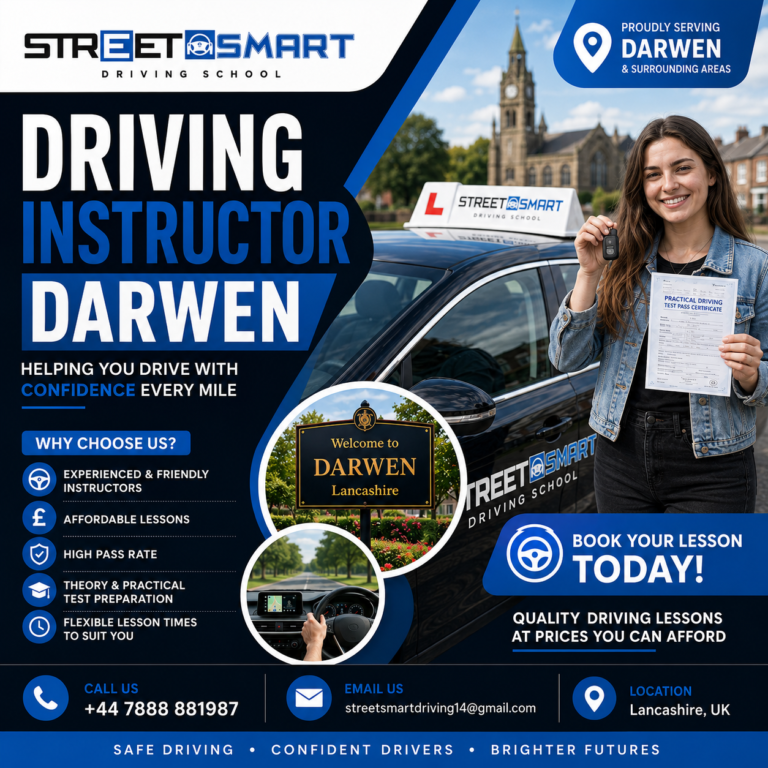
Street Smart Driving School is one provider learners can research when exploring driving tuition in Lancashire. Comparing local instruction options and discussing personal learning goals can help prospective drivers find an approach that suits their requirements.
6. How Learners Can Prepare for the Future of Driving
The changes expected throughout 2026 and 2027 create opportunities for learners to develop more than basic vehicle-control skills.
Anyone planning to begin driving lessons can take several practical steps to prepare:
Understand licence requirements: Check the current DVLA rules and determine whether a manual or automatic licence better suits future plans.
Study before practical lessons: Learning road signs, traffic regulations, and theory test topics can make practical sessions more productive.
Choose suitable instruction: Look for an appropriately qualified instructor who explains mistakes clearly and adapts lessons to individual progress.
Practise consistently: Regular lessons help reinforce observation, positioning, and hazard awareness.
Stay informed about vehicle technology: Understanding modern safety systems and electric vehicle features can prepare learners for changing transport options.
Learners should also consult official Driver and Vehicle Standards Agency (DVSA) resources for current information about theory tests, practical examinations, and driving standards.
Conclusion
The future of UK driving schools in 2026–2027 will be influenced by automatic vehicles, digital learning resources, electric vehicle development, flexible tuition, and a stronger emphasis on road safety. These developments are changing how learners prepare for independent driving while maintaining the importance of professional instruction and practical experience.
For people considering driving lessons Darwen, choosing a suitable learning programme means looking beyond passing the practical test. Developing hazard awareness, understanding modern vehicle technology, and building confidence across different road environments are equally important.
As driving education continues to evolve, learners who combine consistent practice with responsible driving habits will be better prepared for the changing demands of Britain’s roads.
Read More: