
Construction projects in the United States lose significant time and money to design conflicts that surface only after construction begins. A duct that runs through a structural beam, a sprinkler line clashing with a ceiling grid, or electrical conduit fighting for space with plumbing risers are all problems that should be caught long before crews break ground. This is exactly why BIM Clash Detection Services have become a standard part of preconstruction planning for general contractors, MEP subcontractors, and design teams across the country.
This article breaks down the advanced techniques BIM professionals use to identify, prioritize, and resolve clashes efficiently, along with how these workflows directly improve schedule certainty and reduce field rework.
Why Coordination Conflicts Cost Construction Projects Money?
Every building project layers multiple trades into a single physical space. Structural steel, HVAC ductwork, plumbing, electrical conduit, and fire protection systems all compete for the same limited volume above ceilings and within walls. Without coordinated building information modeling, these systems are often designed independently, which creates a high probability of physical conflicts.
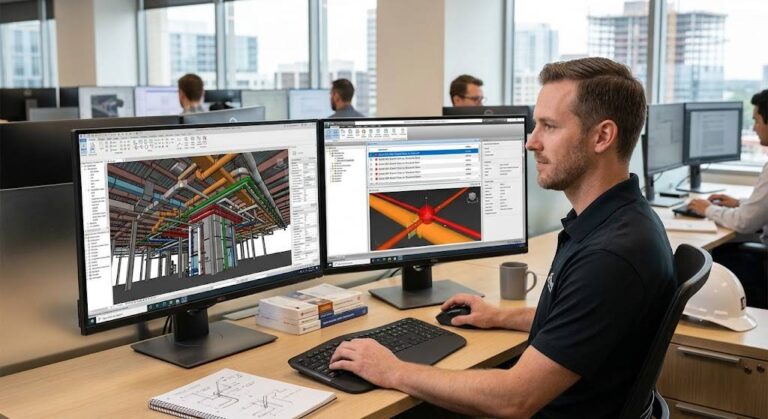
Clash detection software compares 3D models from different disciplines and automatically flags overlaps or near misses. Tools like Autodesk Navisworks and BIM 360 are widely used across US firms for this purpose, allowing teams to review thousands of model elements in minutes rather than relying on manual visual checks.
Techniques That Improve Coordination Accuracy
1. Rule Based Clash Testing
Rather than running a single generic clash test across an entire model, experienced BIM coordinators set up rule based tests that target specific trade combinations. For example, a hard clash test between structural steel and ductwork is treated differently than a clearance clash test between electrical panels and required access space. This segmentation reduces false positives and helps teams focus on conflicts that actually matter.
2. Hard Clash vs Soft Clash vs Workflow Clash Analysis
A mature clash detection process separates issues into three categories.
- Hard clashes are direct physical intersections between two elements, such as a pipe passing through a beam.
- Soft clashes involve clearance violations, like insufficient space for insulation, maintenance access, or code mandated separation distances.
- Workflow clashes relate to construction sequencing, such as a wall scheduled to be built before the duct that must pass through it is installed.
Addressing all three categories is central to thorough Clash Detection and Coordination Services, since schedule conflicts can be just as costly as physical ones.
3. Federated Model Coordination
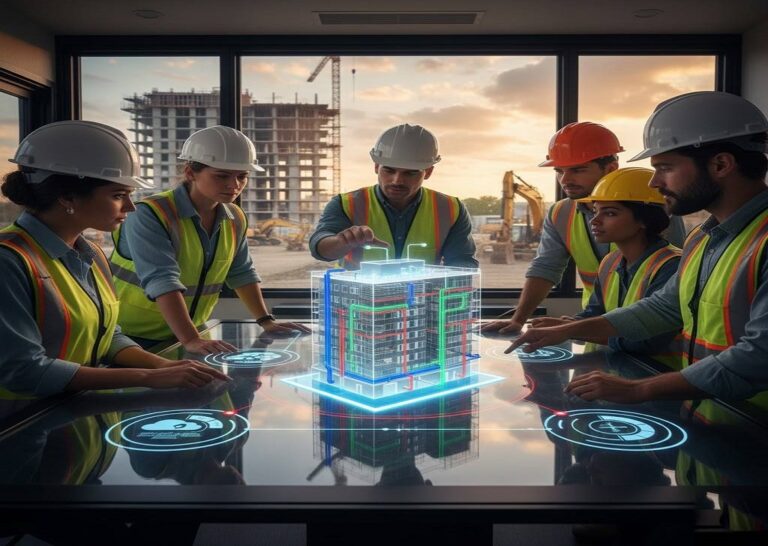
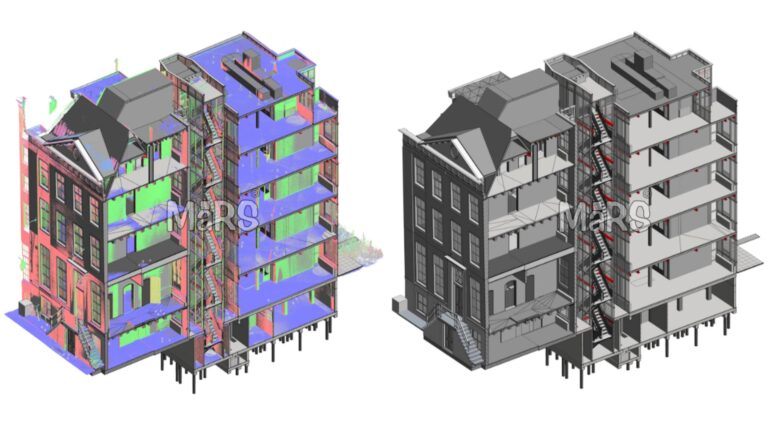
Large projects involve dozens of separate models from architects, structural engineers, and trade contractors. Advanced coordination teams combine these into a federated model, a single composite view used to run clash tests across all disciplines simultaneously. This approach is the backbone of effective MEP Coordination Services, since mechanical, electrical, and plumbing systems are the trades most likely to overlap with one another and with structural elements.
4. Clash Grouping and Priority Scoring
Running a clash test on a complex model can return hundreds or thousands of individual results. Skilled BIM managers group related clashes together and assign priority scores based on factors like construction sequence, cost impact, and trade responsibility. This prevents teams from spending hours resolving low impact clashes while critical ones remain unaddressed.
5. 4D Sequencing Integration
Tying the clash detection process to the construction schedule, often called 4D BIM, lets teams identify conflicts that only appear at specific phases of construction. A crane path that crosses scaffolding, or temporary shoring that blocks planned MEP installation, are caught through this method long before they cause field delays.
MEP Systems and the Cost of Conflicts in the Field
MEP systems account for a large share of coordination issues on most commercial projects, which is why dedicated MEP Clash Detection Services are often run as a separate workstream from general architectural and structural coordination. Ductwork routing, pipe sizing, and electrical conduit paths require frequent adjustment as designs evolve, and catching these conflicts digitally avoids costly cutting, rerouting, or demolition once installation has started.
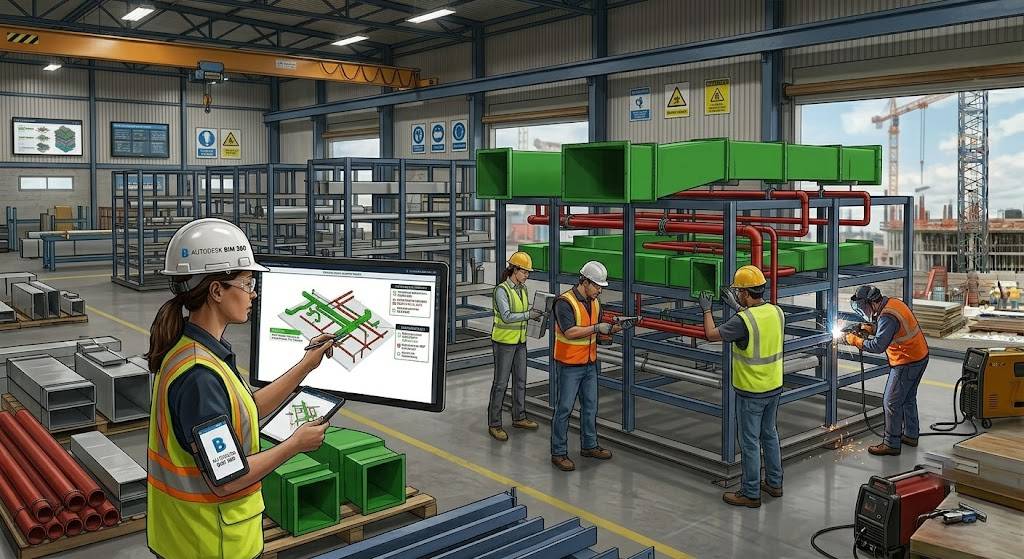
Detailed MEP coordination also supports prefabrication. When duct and pipe routing is verified clash free in the model, fabrication shops can build assemblies off site with confidence that they will fit as designed, which shortens overall installation time on site.
Practical Benefits for General Contractors
For general contractors managing multiple subcontractors and tight schedules, BIM for General Contractors is no longer optional on projects of meaningful scale. Clash detection workflows give GCs a single source of truth for resolving design conflicts before they affect labor productivity. The result is fewer requests for information, fewer change orders tied to field conflicts, and a clearer record of design intent for subcontractors to follow.
According to research published by organizations such as the Associated General Contractors of America, digital coordination tools are increasingly tied to measurable reductions in rework on commercial projects, reinforcing why GCs continue to invest in dedicated coordination workflows.
Putting Together a Reliable Coordination Workflow
A reliable process generally follows these steps.
- Establish a model coordination plan with all stakeholders before modeling begins.
- Set a consistent level of development for each discipline’s model.
- Run rule based clash tests at defined intervals, not just before construction.
- Categorize clashes by type and assign ownership to the responsible trade.
- Track resolution status through a shared issue management platform.
- Validate fixes with a follow up clash run before the model is finalized for construction.
Firms offering professional Clash Detection and Coordination Services typically manage this entire cycle, freeing internal teams to focus on design and field execution rather than model administration.
Conclusion
Advanced clash detection is no longer a check the box exercise. It is a structured discipline that, when done well, prevents costly rework, supports prefabrication, and keeps complex projects on schedule. For BIM managers, coordinators, and general contractors working on US construction projects, investing in mature MEP coordination and clash detection workflows pays for itself many times over once construction begins.
If your team is looking to strengthen its coordination process, working with a dedicated provider of BIM clash detection and coordination services or specialized MEP coordination services can bring the technical depth needed to manage complex, multi trade projects. General contractors exploring how these workflows fit into their own operations can also review dedicated BIM services for general contractors to see how coordination support integrates into standard preconstruction planning.