In modern industrial and infrastructure projects, precise flow control is essential for achieving efficiency, safety, and long-term reliability. Whether managing water distribution, chemical transfer, wastewater treatment, or industrial processing, the performance of control valves directly affects system stability and operating costs.
Among the many flow control devices available today, UPVC butterfly valves have emerged as a preferred solution for lightweight, corrosion-resistant, and cost-effective pipeline systems. Designed for smooth operation and accurate regulation, these valves help industries “control flow with precision” while maintaining durability and low maintenance requirements.
This blog explores the features, advantages, applications, and future potential of UPVC butterfly valves, highlighting why they are a smart investment for modern piping networks.
Understanding UPVC Butterfly Valves
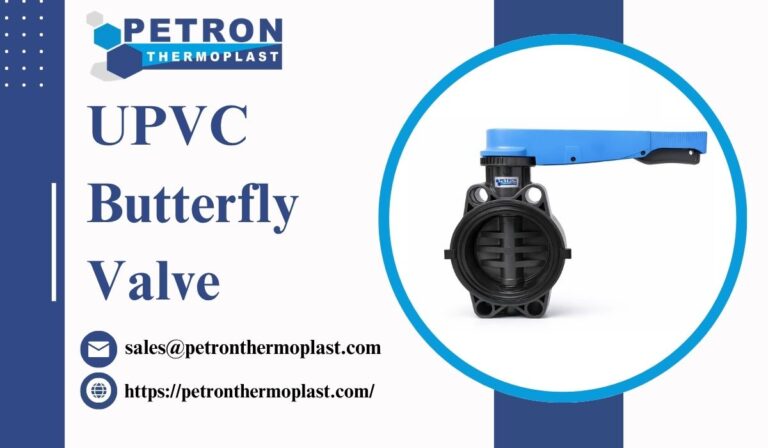
A UPVC butterfly valve is a quarter-turn flow control device that uses a circular disc mounted on a rotating shaft to regulate fluid movement. When the disc is aligned with the pipeline, the valve is open; when turned perpendicular, it blocks the flow.
Manufactured from unplasticized polyvinyl chloride (UPVC), these valves combine mechanical strength with excellent chemical and corrosion resistance. Compared to metal valves, UPVC butterfly valves are lighter, easier to install, and better suited for aggressive or humid environments.
Their compact design and simple operation make them ideal for systems that require frequent flow adjustments and reliable shut-off performance.
Why Precision Flow Control Matters?
In industrial operations, inaccurate flow regulation can lead to serious challenges such as:
- Equipment damage
- Product quality variations
- Increased energy consumption
- System inefficiency
- Safety risks
Precision flow control ensures that fluids move at the desired rate and pressure, maintaining optimal operating conditions. UPVC butterfly valves provide smooth modulation and quick response, helping operators manage complex processes with confidence.
In large infrastructure projects, accurate flow control also minimizes leakage and water loss, supporting sustainability goals.
Key Features of High-Quality UPVC Butterfly Valves
- Corrosion and Chemical Resistance
UPVC material resists acids, alkalis, salts, and many industrial chemicals. This makes butterfly valves suitable for chemical processing, effluent treatment, and industrial utilities where metal valves may fail prematurely.
- Lightweight and Compact Design
UPVC butterfly valves are significantly lighter than cast iron or steel alternatives. Their compact structure reduces installation space and simplifies handling, especially in large pipeline networks.
- Smooth and Accurate Operation
With precision-engineered discs and shafts, these valves provide smooth rotation and accurate flow control. Minimal torque is required for operation, ensuring easy manual or automated actuation.
- Leak-Proof Sealing System
High-quality elastomer or PTFE seals ensure tight shut-off and prevent leakage. This enhances system reliability and reduces fluid loss.
- Low Pressure Drop
The streamlined disc design minimizes flow obstruction, resulting in lower pressure drop and improved energy efficiency.
- Long Service Life
Thanks to their resistance to corrosion, wear, and environmental stress, UPVC butterfly valves can operate reliably for decades under normal conditions.
Advantages of UPVC Butterfly Valves in Industrial Systems
- Cost-Effective Flow Control
UPVC butterfly valves offer excellent performance at a lower cost compared to metal valves. Their long lifespan and minimal maintenance further reduce total ownership costs.
- Reduced Maintenance Requirements
Unlike metal valves, UPVC does not rust or scale. This eliminates frequent cleaning, painting, or replacement, making systems more reliable and economical.
- Energy Efficiency
Low friction loss and smooth flow paths reduce pumping power requirements, helping industries save on energy costs.
- Easy Installation and Replacement
Lightweight construction and standardized dimensions make installation quick and hassle-free. Valves can be replaced or serviced without major system disruption.
- Environmentally Friendly Solution
UPVC is recyclable and has a lower carbon footprint than many traditional materials. Its durability also reduces material wastage over time.
Types and Configurations of UPVC Butterfly Valves
To meet diverse industrial needs, UPVC butterfly valves are available in various designs:
- Wafer Type Butterfly Valves – Compact and easy to install
- Lug Type Butterfly Valves – Suitable for end-of-line service
- Gear Operated Valves – For large diameter pipelines
- Lever Operated Valves – For quick manual control
- Pneumatic and Electric Actuated Valves – For automation systems
These configurations allow engineers to select the most suitable valve for their specific operating conditions.
Major Applications of UPVC Butterfly Valves
- Water Supply and Distribution
Municipal and industrial water systems rely on UPVC butterfly valves for regulating flow and isolating sections during maintenance.
- Chemical Processing Plants
Their chemical resistance makes these valves ideal for handling acids, solvents, and reactive fluids.
- Wastewater and Effluent Treatment
UPVC butterfly valves perform reliably in corrosive and contaminated environments, ensuring uninterrupted operation.
- Power and Utility Projects
Cooling water and auxiliary pipelines use butterfly valves for efficient flow management.
- Agriculture and Irrigation Systems
Large irrigation networks benefit from precise flow control and low maintenance requirements.
- Manufacturing and Process Industries
Food processing, textiles, pharmaceuticals, and paper industries use UPVC butterfly valves for stable and hygienic fluid handling.
Quality Manufacturing: The Foundation of Reliability
The performance of a UPVC butterfly valve depends heavily on manufacturing standards and material quality. Leading manufacturers focus on:
- High-grade UPVC resin
- Precision molding and machining
- Accurate shaft and disc alignment
- Pressure and leakage testing
- Dimensional inspection
- Seal performance validation
Companies such as Petron Thermoplast follow strict quality control procedures to ensure consistent performance, durability, and compliance with international standards.
Such commitment to quality gives project owners confidence in long-term system reliability.
Installation Best Practices for Optimal Performance
Proper installation is essential to achieve precise flow control and long service life:
- Correct Alignment – Ensure the valve is centered in the pipeline
- Clean Pipe Ends – Remove debris and dust before mounting
- Proper Bolt Tightening – Apply uniform torque to avoid leakage
- Adequate Support – Prevent pipeline stress on the valve body
- Functional Testing – Check operation before commissioning
Following these practices minimizes operational issues and extends valve life.
Maintenance and Operational Guidelines
UPVC butterfly valves require minimal maintenance, but regular inspection improves reliability:
- Check seals periodically
- Inspect disc movement
- Clean external surfaces
- Monitor pressure and flow variations
- Replace worn components when needed
Routine maintenance ensures consistent performance and prevents unexpected shutdowns.
Customization for Modern Infrastructure Projects
Large-scale and specialized projects often require customized valve solutions. Leading manufacturers offer:
- Custom pressure ratings
- Special seal materials
- Non-standard sizes
- Automation-ready designs
- Project-specific branding
Customization allows engineers to optimize flow control systems according to exact project requirements.
Future Role of UPVC Butterfly Valves in Smart Infrastructure
With the rise of smart cities and automated utilities, UPVC butterfly valves are evolving to support advanced systems. Future developments include:
- Integration with IoT-based monitoring
- Improved UV-resistant formulations
- Higher pressure capacities
- Advanced actuator technologies
- Enhanced recyclability
These innovations will strengthen the role of UPVC butterfly valves in next-generation infrastructure.
Conclusion
UPVC butterfly valves are a vital component in modern piping systems, offering precise flow control, corrosion resistance, and long-term reliability. Their lightweight design, low maintenance needs, and cost efficiency make them ideal for industrial, commercial, and infrastructure applications.
By choosing high-quality valves from trusted manufacturers like Petron Thermoplast and following proper installation and maintenance practices, organizations can achieve superior operational performance and reduced lifecycle costs. In an era where efficiency, sustainability, and reliability define project success, UPVC butterfly valves truly enable industries to control flow with precision—ensuring smooth operations today and dependable performance for years to come.