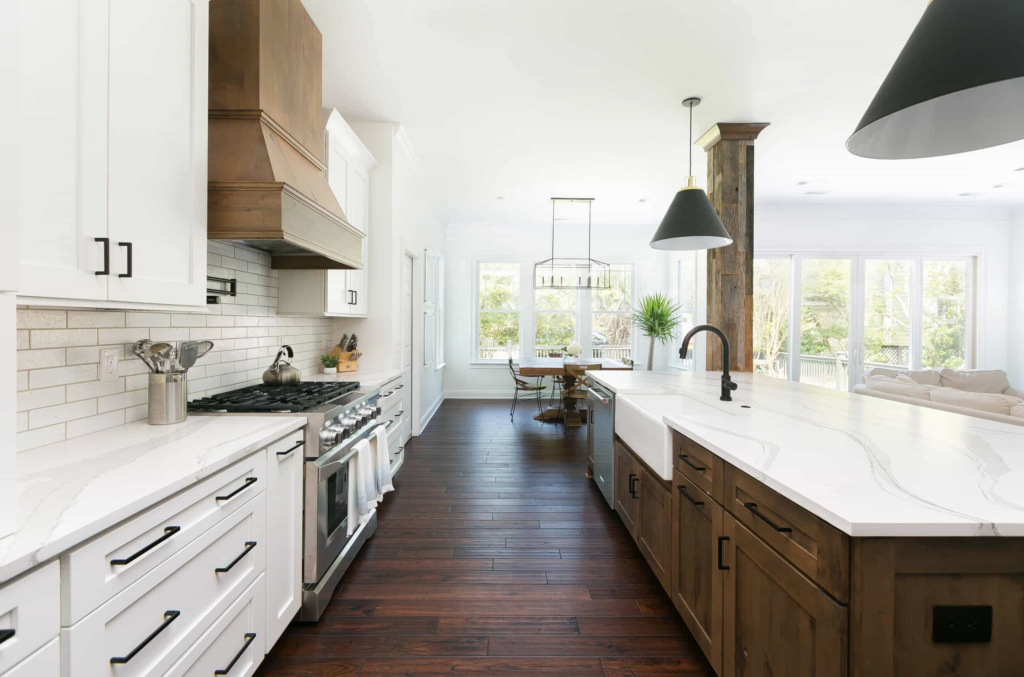
Its crisp and bright tone adds light, openness, and a sense of order to any space, making the Farmhouse White Kitchen Island a central feature of the kitchen. Styling it requires attention to balance aesthetics with functionality. Accessories, textures, and decor elements play a key role in achieving a charming yet practical look. Whether the kitchen leans rustic or modern farmhouse, a white island provides a versatile canvas to create a space that is welcoming, organized, and perfect for cooking, dining, and social interactions with family and guests.
Choose the Right Countertop Material
The countertop is the most prominent feature of a farmhouse island. Materials like butcher block, marble, or quartz pair beautifully with white cabinetry. Wooden countertops add warmth and rustic charm, while marble surfaces bring elegance and a timeless appeal. For added depth, consider combining materials, such as a white base with a slightly darker wooden top. Durability and maintenance are equally important, as a countertop should withstand daily cooking activities. Choosing the right material ensures the island is both visually appealing and long-lasting while enhancing the overall farmhouse aesthetic.
Incorporate Functional Storage
A kitchen island works best when storage is practical and accessible. Drawers, cabinets, and open shelving help keep essentials organized while preventing clutter on the countertop. Open shelves can display decorative pieces or frequently used utensils, adding visual interest. Hidden cabinets and drawers maintain a clean and streamlined appearance. Built-in features like wine racks, spice organizers, or trash bins increase usability. Thoughtful storage ensures the island remains a functional centerpiece, allowing the space to stay tidy while providing quick access to cooking tools, cookware, and serving essentials without compromising farmhouse style.
Add Rustic Accents
Rustic touches bring character and warmth to a white kitchen island. Reclaimed wood stools, wrought-iron fixtures, or vintage drawer pulls complement the farmhouse look. A distressed tray on the countertop can hold candles, potted plants, or cooking essentials. Textured accents like woven baskets, linen napkins, or ceramic jars create layers of visual interest. Combining rustic elements with a clean white base balances charm and simplicity. These small details enhance the cozy atmosphere of the kitchen, making the island inviting for both everyday use and entertaining while reinforcing the timeless farmhouse aesthetic.
Highlight with Decorative Lighting
Lighting plays a crucial role in defining the island’s presence. Pendant lights in black, bronze, or copper create a striking contrast with a white surface. Clear glass pendants or globe lights maintain brightness without overwhelming the space. Layered lighting, combining overhead fixtures with task lighting or under-cabinet illumination, ensures functionality and emphasizes textures and décor. Well-planned lighting highlights key design elements while making cooking and prep work easier. The combination of style and function transforms the white kitchen island into a visually appealing focal point that draws attention and enhances the farmhouse charm.
Style with Functional Decor
Decorating a farmhouse island blends beauty with purpose. Items such as cutting boards, ceramic bowls, or vintage pitchers are both practical and decorative. Small potted herbs introduce freshness and color. Seasonal decorations like autumn pumpkins or spring flowers keep the island lively and inviting. Choosing pieces that serve a function prevents clutter while maintaining a cohesive design. Functional decor allows the island to remain a workspace while reflecting personality and style. Proper selection ensures the farmhouse island looks organized, welcoming, and visually interesting without sacrificing its primary role as a central hub for cooking and gathering.
Integrate Seating Comfortably
Seating transforms a kitchen island into a social space. Wooden stools enhance rustic warmth, while metal seating suits a modern farmhouse design. Ensure stools are proportionate to the island’s height for comfort. Adding cushions or fabric covers creates softness and complements the white tone. Proper seating encourages casual dining, conversation, and family interaction, making the island multifunctional. Thoughtful placement ensures circulation remains smooth. By combining comfort and design, the seating area turns the farmhouse kitchen island into more than a cooking space, creating an inviting area for entertaining guests or sharing daily meals with family.
Mix Textures and Materials
A monochrome white island can appear flat without texture. Incorporating materials such as wood, metal, linen, and woven elements creates depth and visual interest. Linen runners, copper utensils, or wooden bowls subtly break the uniformity of white while keeping the farmhouse style intact. Textures also help delineate functional areas, like prep zones or display surfaces. Thoughtful layering ensures the space remains balanced, inviting, and dynamic. Mixing materials prevents the island from feeling sterile while highlighting rustic and modern elements, maintaining a clean aesthetic that appeals to both style-conscious and practical homeowners.
Keep It Minimal Yet Inviting
Simplicity enhances the beauty of a white farmhouse island. Limit countertop items to essentials or carefully chosen decorative pieces. Clean surfaces emphasize space, brightness, and organization, preventing the area from looking cluttered. Minimalism allows each decorative element to stand out, highlighting the farmhouse charm. A restrained approach ensures the island remains functional while creating an airy and inviting ambiance. Prioritizing minimalism also makes maintenance easier and encourages better organization. The result is a stylish centerpiece that balances form and function, maintaining both elegance and practicality in the kitchen space.
Seasonal Styling Ideas
Changing decor with the seasons keeps the island fresh. Winter calls for pine cones, candles, or small wreaths. Spring favors flowers and pastel ceramics. Summer is perfect for fruit bowls or fresh greenery, while autumn brings pumpkins, gourds, and warm tones. A white island provides a versatile base that allows seasonal items to stand out without overwhelming the space. Rotating decorations offers a dynamic look and ensures the kitchen stays engaging. Seasonal styling lets the island reflect the time of year, adding charm and vibrancy to the farmhouse aesthetic throughout the calendar.
Conclusion
A white farmhouse kitchen island blends style, warmth, and utility seamlessly. Combining layered textures, rustic accents, functional decor, lighting, and comfortable seating makes it a versatile and inviting centerpiece. Seasonal touches and minimalist arrangements further enhance the aesthetic while preserving practicality. A well-styled white island becomes a space where cooking, dining, and socializing converge harmoniously. With attention to detail, homeowners can maintain a functional and visually appealing kitchen hub that embodies the charm and elegance of the farmhouse style for years to come.