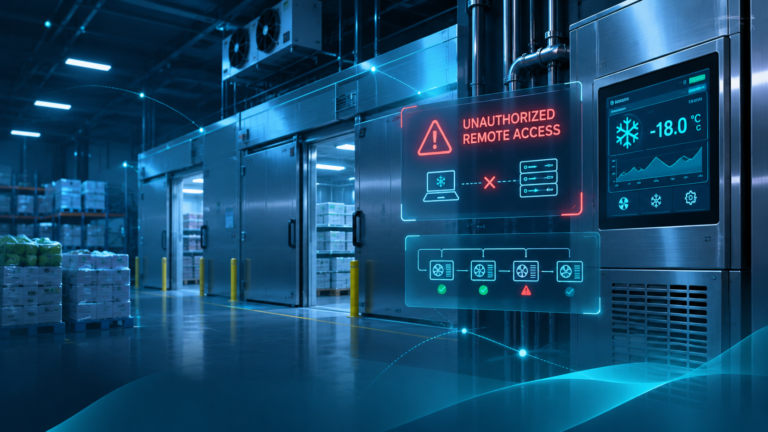

Cyberattacks have disrupted refrigeration systems across European supermarkets, with the latest incidents also affecting food suppliers in the United Kingdom. Hackers gained unauthorized access to connected refrigeration controls, changing temperature settings and triggering defrost cycles that put food supplies at risk.
On November 3, the UK’s National Cyber Security Centre (NCSC) confirmed that a small number of British organizations had been affected. Although the reported impact in the UK remained limited, the incidents have raised concerns about the security of internet-connected operational systems.
Unlike cyberattacks focused on stealing data or encrypting files, these incidents interfered directly with equipment that businesses depend on for daily operations.
What Happened in the UK Cyberattack?
The latest attacks followed earlier incidents involving refrigeration systems at hundreds of supermarkets in France in October 2026.
On November 2, supermarkets across several European countries, including Belgium, Ireland, Sweden, Estonia, and Luxembourg, reported disruptions to their cooling systems.
Attackers remotely manipulated refrigeration controls, causing temperatures to rise or equipment to enter defrost cycles. Some affected European businesses were forced to discard spoiled food.
The attacks also reached the UK’s food supply chain.
According to reports published on November 3:
- Several UK meat suppliers experienced unauthorized changes to refrigeration settings.
- A London-based fresh produce wholesaler reported that six of its ten cold-room control systems had been compromised.
- Attackers reportedly disabled automated temperature alerts at the wholesaler.
- The NCSC confirmed that it was working with affected UK organizations and contacting businesses with vulnerable technology.
Despite these disruptions, UK officials described the overall national impact as minimal at the time of reporting.
How Did Hackers Access Refrigeration Systems?
The incidents involved operational technology (OT), which includes hardware and software used to monitor and control physical equipment.
Many commercial refrigeration systems rely on connected controllers that allow technicians to monitor temperatures, adjust settings, and manage equipment remotely.
These capabilities support daily operations, but poorly secured remote access can expose equipment to attackers.
Investigations into the earlier French incidents identified legacy technology connected to the internet and protected by default passwords. Reporting on the broader European attacks also identified known software vulnerabilities and insufficiently protected remote access interfaces.
Once attackers gain administrative access to a refrigeration controller, they may be able to change operating parameters without physically accessing the equipment.
Depending on the system and access permissions, unauthorized changes can include:
- Increasing temperature settings beyond safe storage limits.
- Activating defrost cycles.
- Changing equipment operating schedules.
- Disabling or modifying automated alerts.
The exact intrusion method has not been publicly confirmed for every affected organization.
Why These Cyberattacks Matter Beyond the Retail Industry
The refrigeration incidents show how cybersecurity weaknesses can affect physical business operations.
Organizations increasingly depend on connected equipment for manufacturing, logistics, healthcare, food storage, and building management.
If attackers gain access to these systems, the consequences may extend beyond IT disruption.
Operational downtime: Compromised controllers can interrupt equipment operations and require emergency intervention.
Financial losses: Businesses may face damaged inventory, equipment repairs, recovery expenses, and lost revenue.
Supply chain disruption: Problems at suppliers, warehouses, or distribution facilities can affect businesses further along the supply chain.
Safety and compliance risks: Unauthorized changes to temperature-sensitive equipment can create product safety concerns and additional compliance obligations.
The risks are especially relevant to organizations that operate legacy systems or depend on third-party vendors for remote equipment management.
What Can Businesses Learn from the UK Cyberattack?
The latest incidents provide several practical lessons for organizations managing internet-connected equipment.
1. Identify Internet-Exposed Systems
Businesses should maintain an inventory of connected equipment, including refrigeration controllers, industrial systems, building management platforms, and remote monitoring devices.
Identify systems that can be accessed directly from the public internet and remove unnecessary exposure.
2. Replace Default Passwords and Secure Remote Access
Factory-default credentials can make connected equipment easier to compromise.
Replace default passwords with unique credentials, restrict administrative privileges, and enable multifactor authentication where supported.
Remote maintenance access should be limited to authorized users through properly secured connections.
3. Keep Software and Firmware Updated
Outdated equipment may contain known vulnerabilities that attackers can exploit.
Organizations should work with equipment manufacturers and service providers to identify available security updates.
For operational technology, updates should be tested and scheduled carefully to avoid interrupting critical processes.
4. Separate Operational Technology from Business Networks
Operational systems should not have unrestricted connectivity to corporate IT networks or the internet.
Network segmentation, access controls, and firewalls can help limit unauthorized communication and reduce the potential impact of a compromise.
5. Monitor Suspicious Activity and Prepare for Equipment Failure
Businesses should monitor remote access activity, unauthorized configuration changes, and unexpected system behavior.
Where feasible, independent physical monitoring and manual verification can help identify unsafe operating conditions even if automated alerts are compromised.
Organizations should also maintain incident response procedures for isolating affected systems, contacting equipment vendors, and safely restoring operations.
How Managed Cybersecurity Services Can Help
Protecting connected business systems requires visibility into potential vulnerabilities, suspicious activity, and unauthorized access.
SafeAeon provides managed cybersecurity services that help organizations monitor security events, investigate potential threats, and improve their security posture.
Depending on the systems, integrations, and agreed service scope, relevant services may include:
- 24×7 Security Monitoring: Monitor supported systems and security events for potentially suspicious activity.
- Managed Detection and Response (MDR): Investigate and respond to supported threats across monitored environments.
- Vulnerability Assessment: Identify security weaknesses that may expose business systems to cyberattacks.
Specialized operational technology controls and equipment-level monitoring may require additional capabilities beyond conventional IT security services.
Organizations should assess how their existing security measures cover connected equipment and remote management interfaces.
Conclusion
The November 2026 refrigeration cyberattacks affected businesses across Europe and reached parts of the UK’s food supply chain.
While the reported UK impact was limited, the incidents revealed how weaknesses in connected operational systems can disrupt physical equipment and business operations.
For organizations relying on internet-connected devices, reviewing remote access, software updates, system exposure, and monitoring capabilities is a practical place to start.
Cybersecurity planning must account for the equipment and systems that keep business operations running.